Technologies
The Right Technology to Match Your Mission
X-Ray Transmission
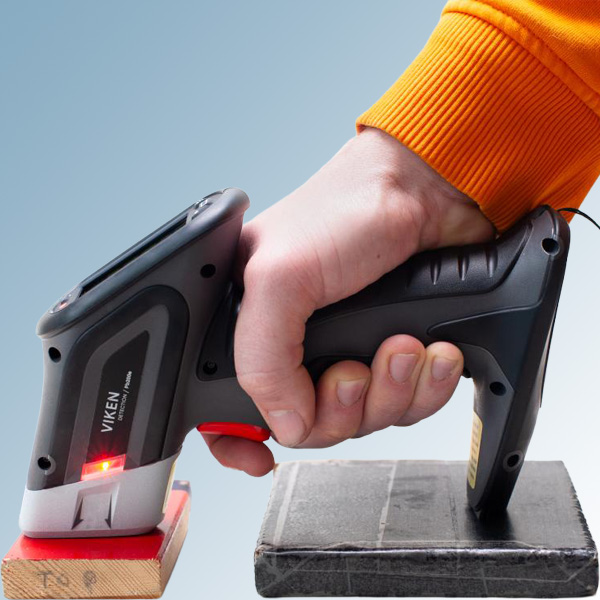
Viken Detection offers a selection of handheld, mobile and portal scanning that use advanced X-ray technology to scan places where contraband or other items may be hidden. Viken technology detects signals that both reflect and transmit through the object (drugs, weapons, explosives) and creates a 2D real-time image.
X-Ray Transmission Imaging
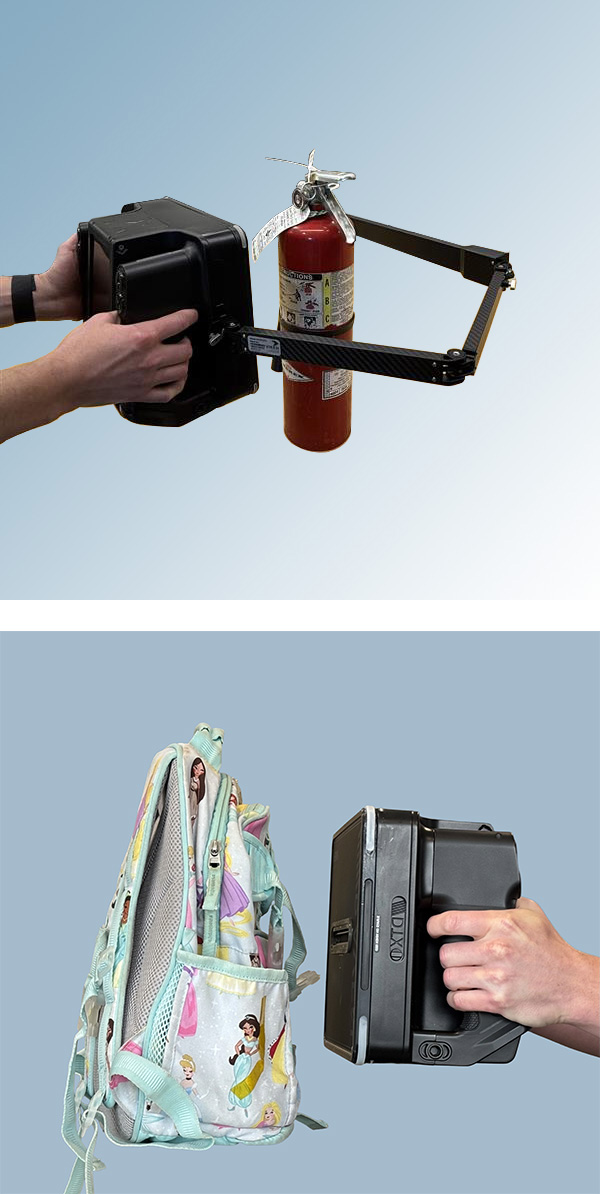
Transmission X-ray has been used for decades in medical and airport applications. The X-ray source sits on one side, and a detector array (panel or DTX arm) sits on the opposite side of the object being scanned. X-rays pass through the object, and different materials absorb different amounts of radiation depending on their density. Dense materials (metal, for example) block more radiation and appear dark on the resulting image, while less dense materials (organic matter, plastics, liquids) let more radiation through.
Viken Detection offers a complete line-up of handheld, mobile and portal systems that can utilize both backscatter and transmission X-ray imaging to provide a complete scanning solution.
Strengths:
- Produces a detailed, high-resolution “shadow” image of everything inside an object.
- Great for revealing internal structure, shape, and density contrast.
- Well suited to enclosed containers, luggage, packages, and other objects where you need to see what’s inside.
X-ray Backscatter
X-ray Backscatter works differently than X-ray Transmission. With backscatter, the source and detector sit on the same side. Instead of measuring X-rays that pass through, backscatter detects X-rays that reflect/scatter back off the surface and near-surface layers. Organic materials like plastics, drugs, explosives scatter X-rays strongly, which makes them show up with high contrast, while metals tend to scatter less and appear dark.
Viken Detection offers a complete line-up of handheld, mobile and portal systems that can utilize both backscatter and transmission X-ray imaging to provide a complete scanning solution.
Strengths:
- Only needs access to one side of the object — ideal for scanning vehicles, walls, cargo containers
- Highly sensitive to organic materials, making it particularly effective for detecting concealed threats like explosives, narcotics, or non-metallic weapons that transmission or metal detectors might miss
Ion Mobility Spectrometry (IMS)
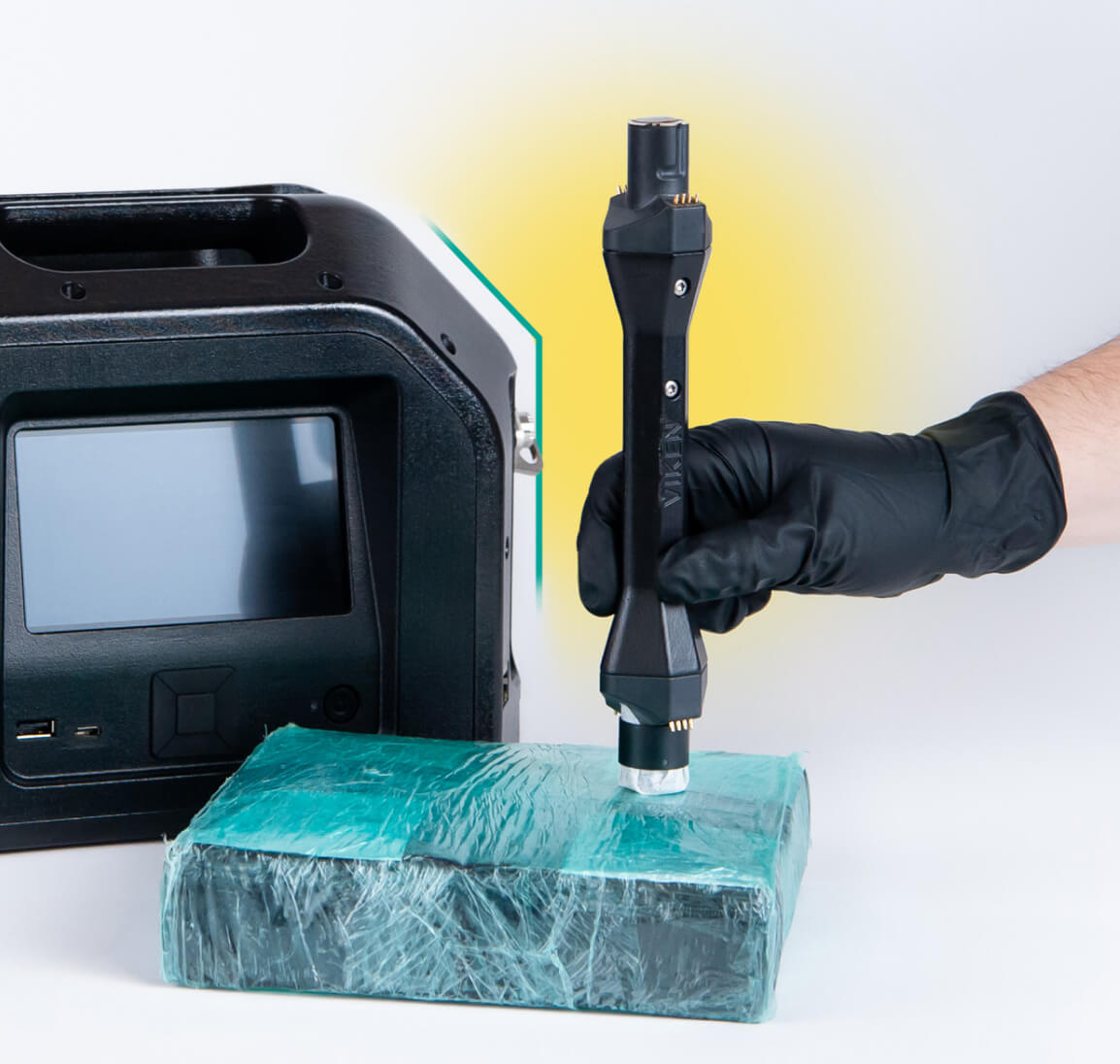
IMS technology (Ion Mobility Spectrometry) is a chemical detection technique that works by converting a sample into charged particles and then observing how those ions move within a gas-filled detection tube. As the ions travel through the tube under an electric field, their speed is influenced by their size, shape, and charge, creating a unique signature for each substance. By measuring the time, it takes ions to reach the detector, IMS can identify specific chemical compounds with a high degree of accuracy. This makes it a powerful tool for detecting trace amounts of narcotics even when a substance is no longer visibly present, since residual particles can linger on surfaces.
The Viken Detection Foxhound is a compact, portable radiation-free, chemical detector based on IMS technology deployed for trace narcotics detection.
Strengths
- IMS technology is a true trace technique that is capable of nanogram detection of narcotics in residue and particle samples.
- Analyze samples in 10 seconds or less. Clear down for high loads quickly.
- No radioactive source or materials; no class 3B lasers.
- Multi-sampling wand for visible and non-visible residue trace samples.
X-Ray Fluorescence (XRF)
X-ray fluorescence technology analyzes and determines what elements in the periodic table make up a specific object or sample. Viken devices work by measuring the fluorescence (or secondary) X-ray emitted from a sample when it is scanned by a primary X-ray source.
The Viken PB200e and PB200w employ K-Shell XRF Technology and utilize Co-57 as their Primary X-ray source. As such, the unit can detect secondary X-rays from lead K Shell which can be detected below multiple layers of paint or galvanized steel as can be the case for pipes.
Strengths:
- Emits and detects highly energetic K-shell X-rays that are not attenuated by layers of additional paint or even by galvanized steel as is the case with X-ray tube-based L Shell XRF.
- NRC exempt meaning no licensing or registration ever is needed.
- Lightweight, IP-54 and Mil-Spec 810G certified.