Critical Infrastructure
Spot the Threat Before It Disrupts the System
Critical infrastructure sites, including government buildings, healthcare facilities, large-scale manufacturing sites, utility providers, and transportation systems — rely on Viken’s full range of x-ray imaging technologies to screen vehicles and personal items entering their grounds. Our large vehicle scanners (fixed or mobile) and smaller handheld devices allow for comprehensive and flexible inspection of vehicles and personal items including backpacks, purses, and coolers brought onsite at a variety of venues.
Handheld, Fixed, and Mobile X-Ray Scanning Options
Viken’s critical infrastructure security solutions are built around three deployment types, so facilities can match inspection capability to their specific security needs:
- Handheld x-ray imagers
- Portable devices for on-the-spot inspection of personal items like backpacks, purses, and coolers at entry points, screening checkpoints, or during targeted searches.
- Fixed large-scale vehicle scanners
- Permanently installed systems for continuous, high-throughput screening of vehicles entering high-security sites such as government buildings or utility facilities.
- Mobile trailer-mounted scanners
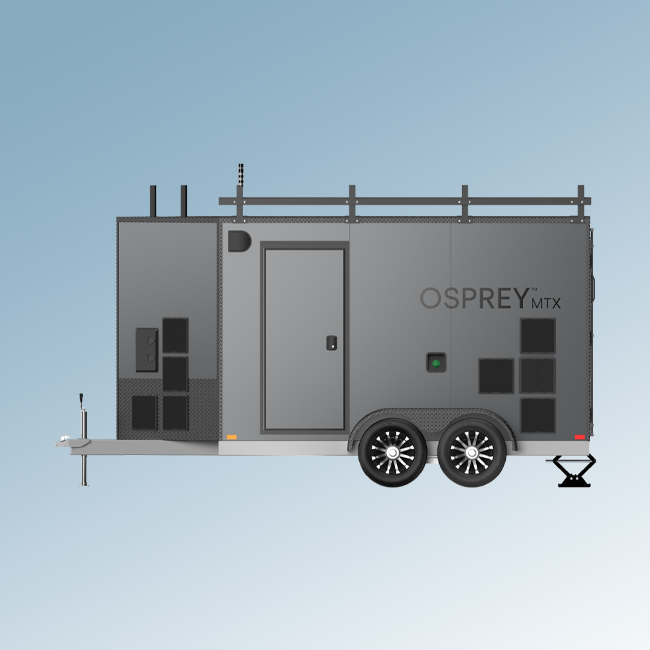
- Trailer-based vehicle scanning units that can be transported and set up for inspection wherever they’re needed, offering large-scale screening capability without a permanent installation.
Why Critical Infrastructure Sites Choose Viken X-Ray Scanners
This combination of handheld, fixed, and mobile technology helps critical infrastructure security teams:
- Screen vehicles and personal items without disrupting the flow of authorized personnel and visitors
- Deploying large-scale vehicle scanning capability permanently or temporarily, depending on site needs
- Inspect backpacks, purses, coolers, and other personal items at entry checkpoints
- Scale inspection coverage up or down for planned events, elevated threat levels, or everyday operations
- Support security needs across government buildings, healthcare facilities, manufacturing sites, utility providers, and transportation systems
Featured Products
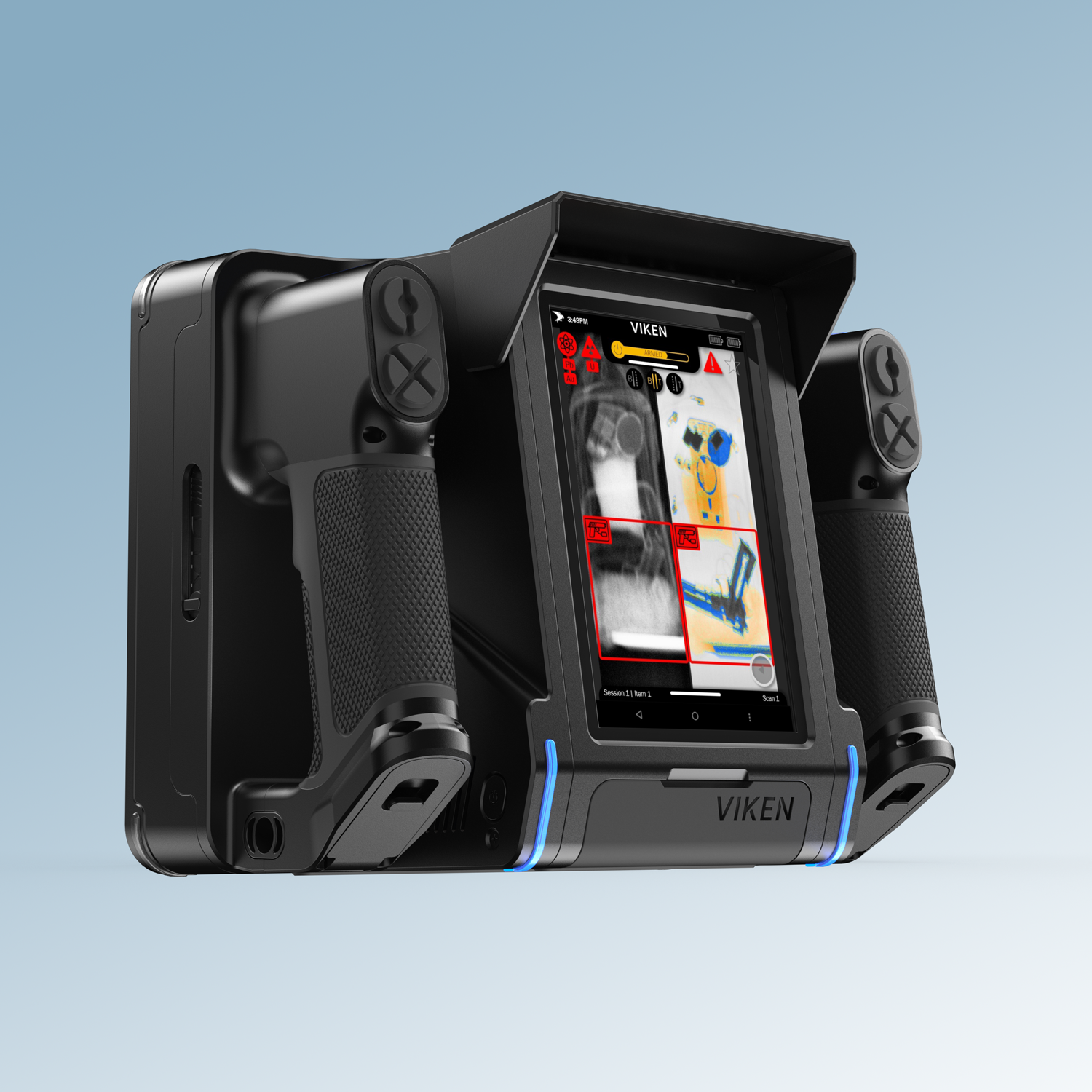
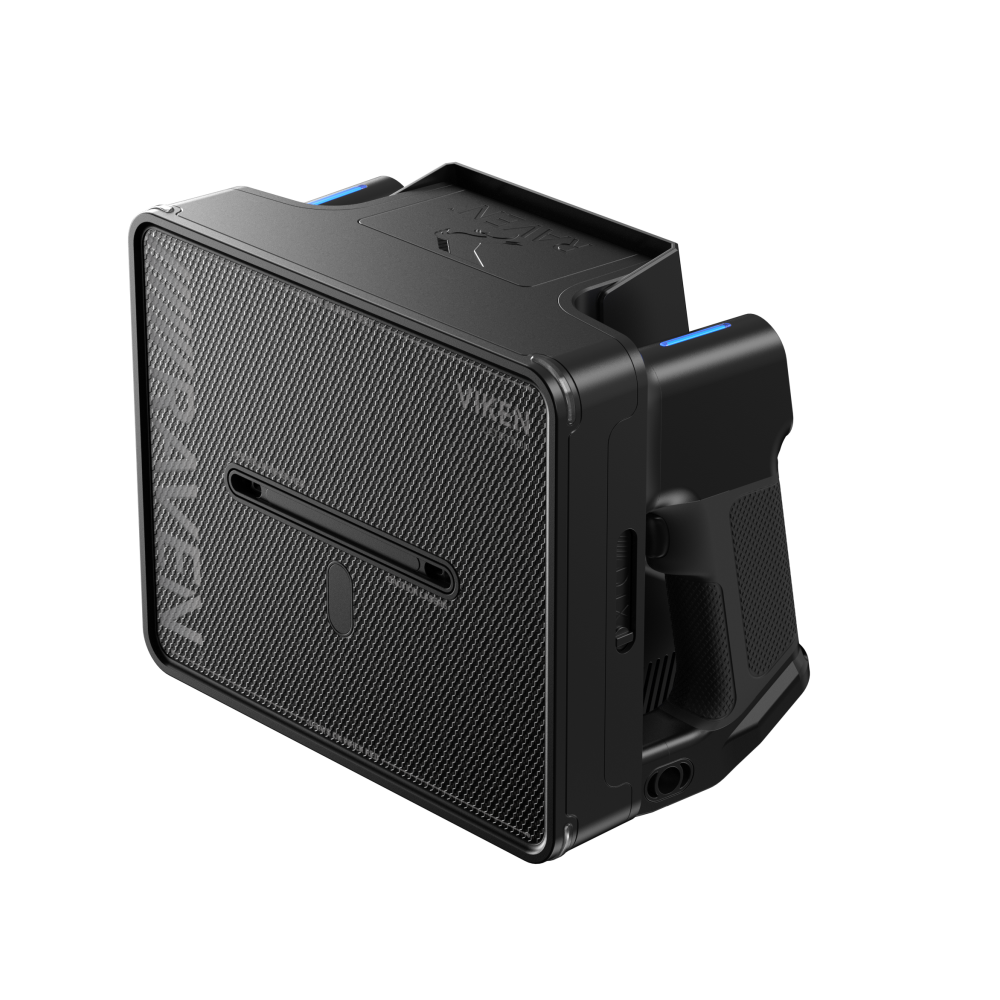
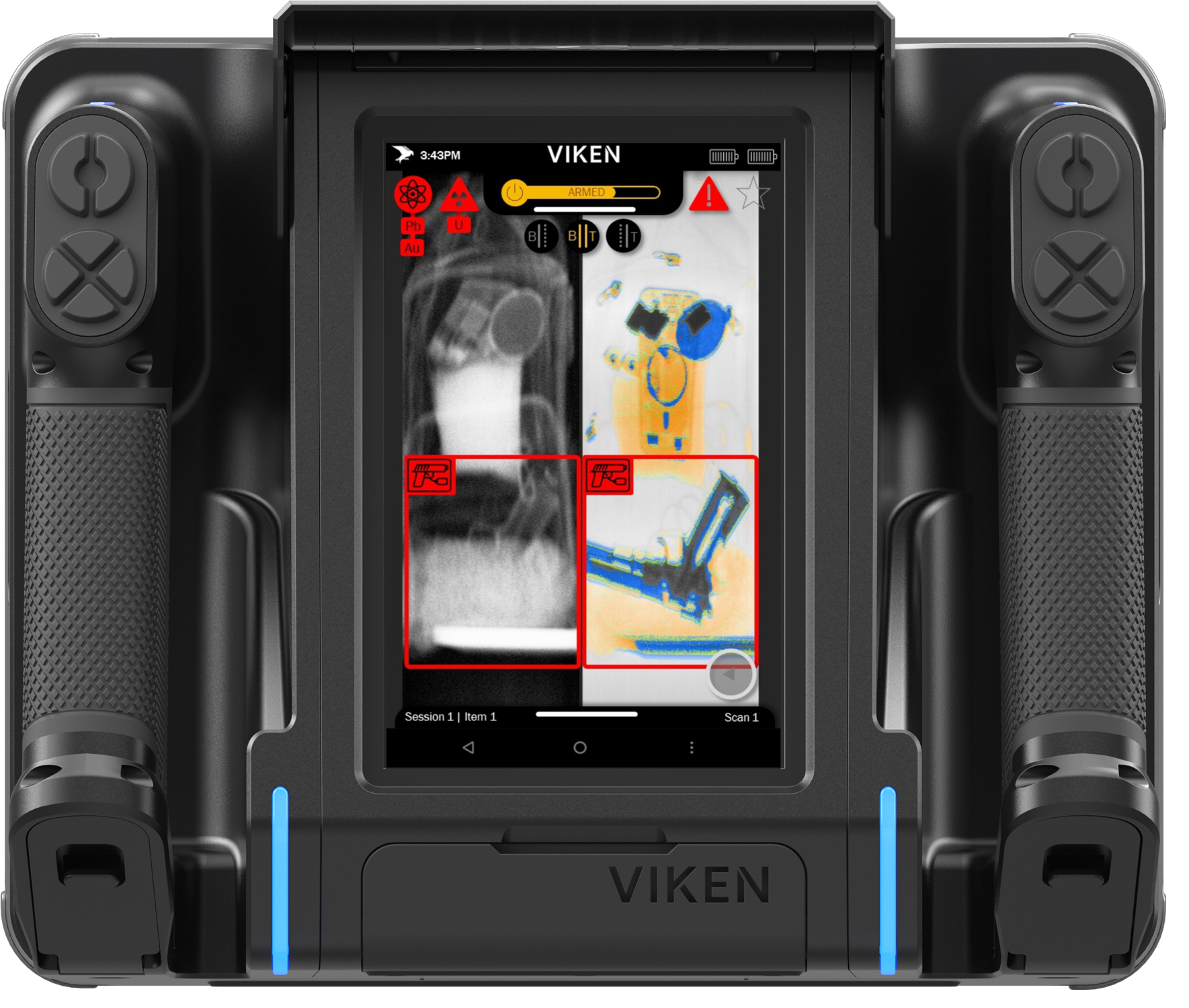
Raven
Raven™
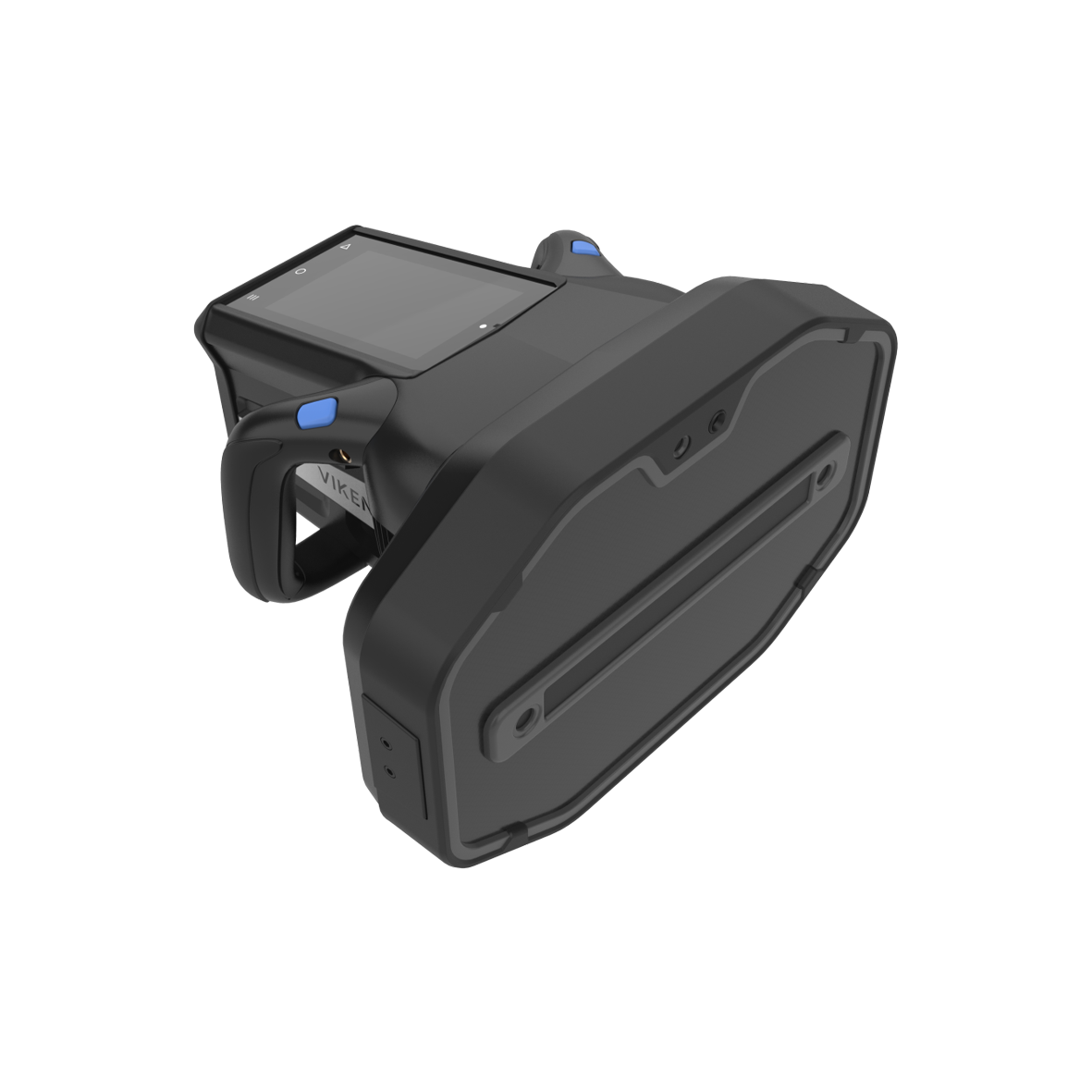
Introducing RAVEN: Handheld “Smart” X-ray Imager
The Raven handheld imager provides outstanding mobility, enhancing threat detection across various environments. Its lightweight and ergonomic design optimizes user efficiency, while its advanced imaging technology, multifunctional detection capabilities, and AID Toolset facilitate the rapid identification of concealed threats. The Raven is an essential asset for mobile security operations.
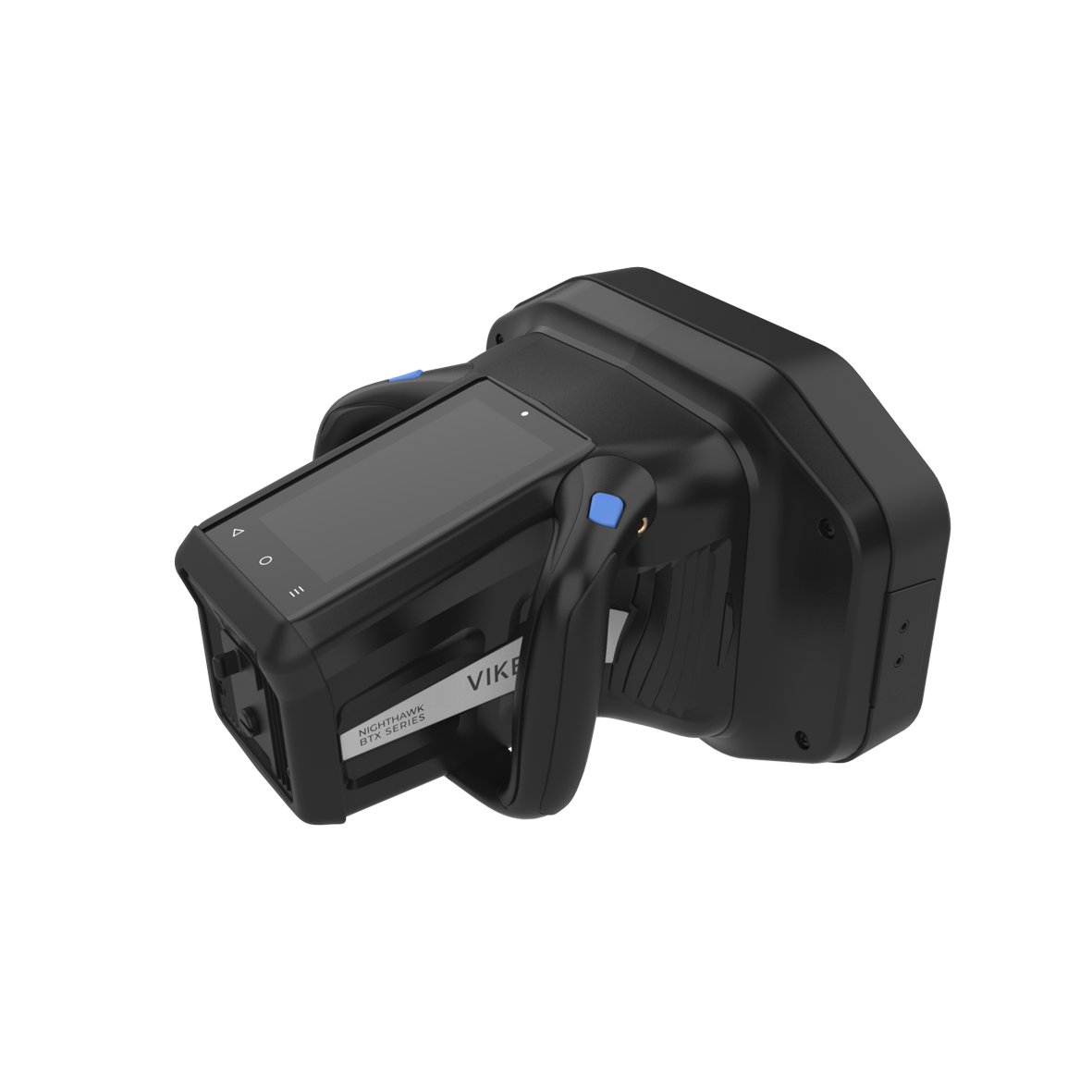
Nighthawk™
Nighthawk™
The Next Generation Handheld X-ray Imager
Viken’s Nighthawk HBI and BTX handheld X-ray are rugged and economical imagers. The Nighthawk HBI is our smallest X-ray imager adept at rooting out concealed contraband in the most challenging environments including passenger vehicles and hidden containers. The Nighthawk BTX is a powerful backscatter and transmission (when equipped with optional DTX arm) handheld X-ray system that boosts enhanced image quality and available 140kV X-ray tube.
Both the Nighthawk HBI and BTX are available with optional PbID™, an XRF-based lead identification capability.
X-ray Portals
X-ray Portal Vehicle Detection Systems
Purpose-built Portals for X-ray Detection
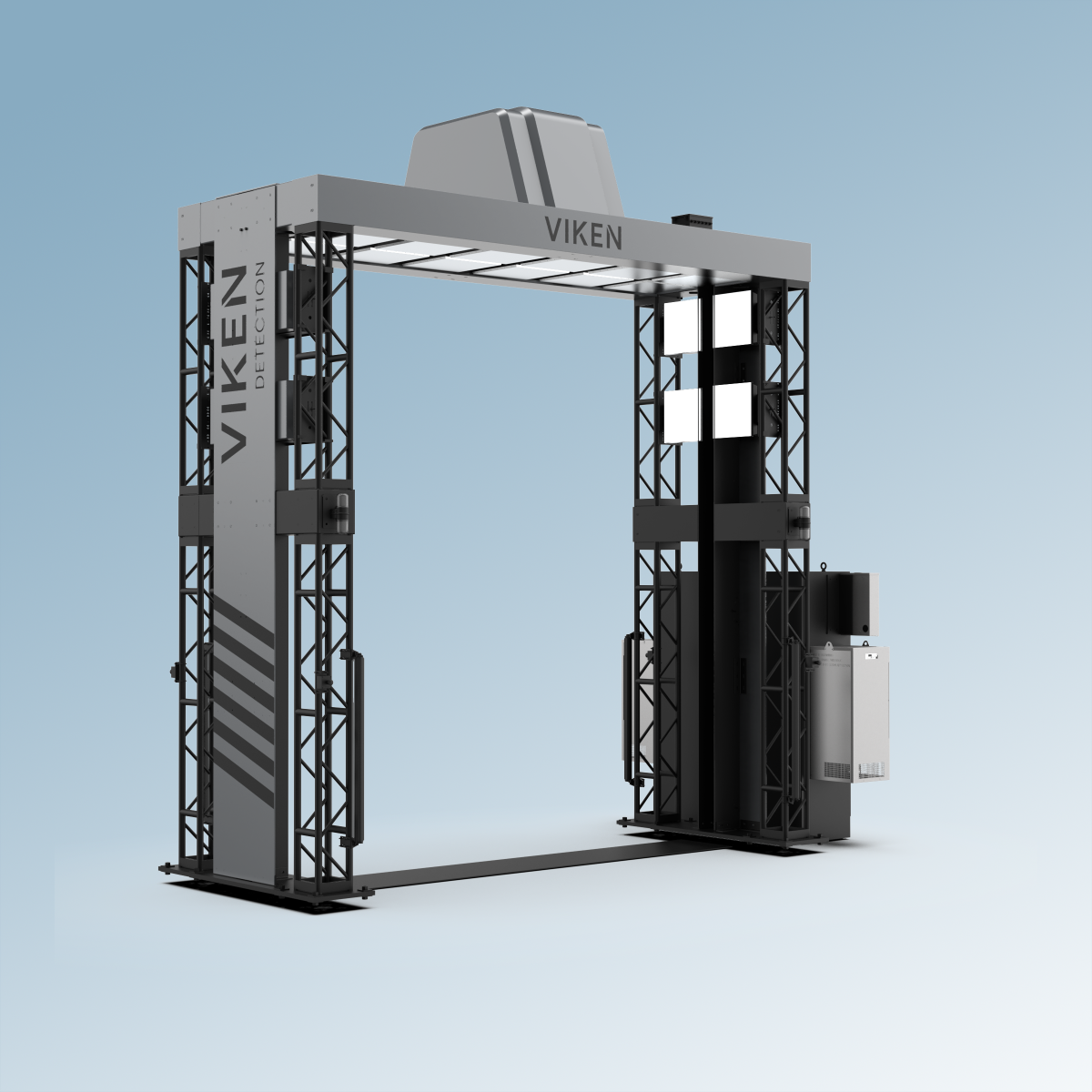
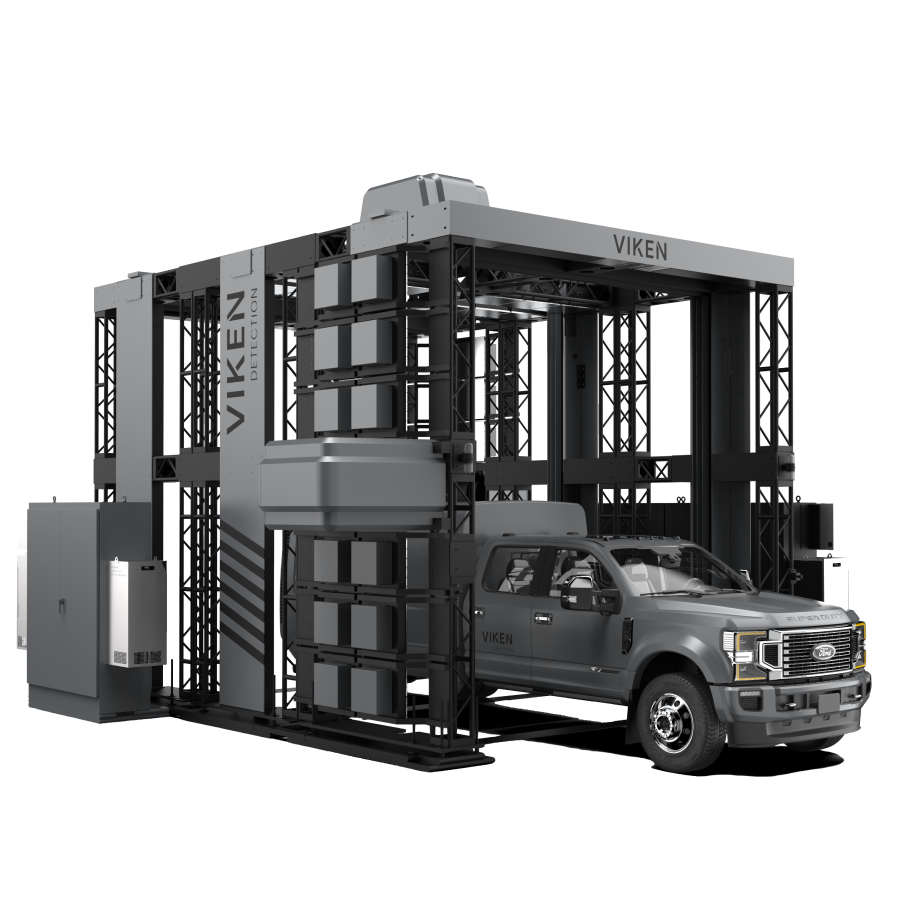
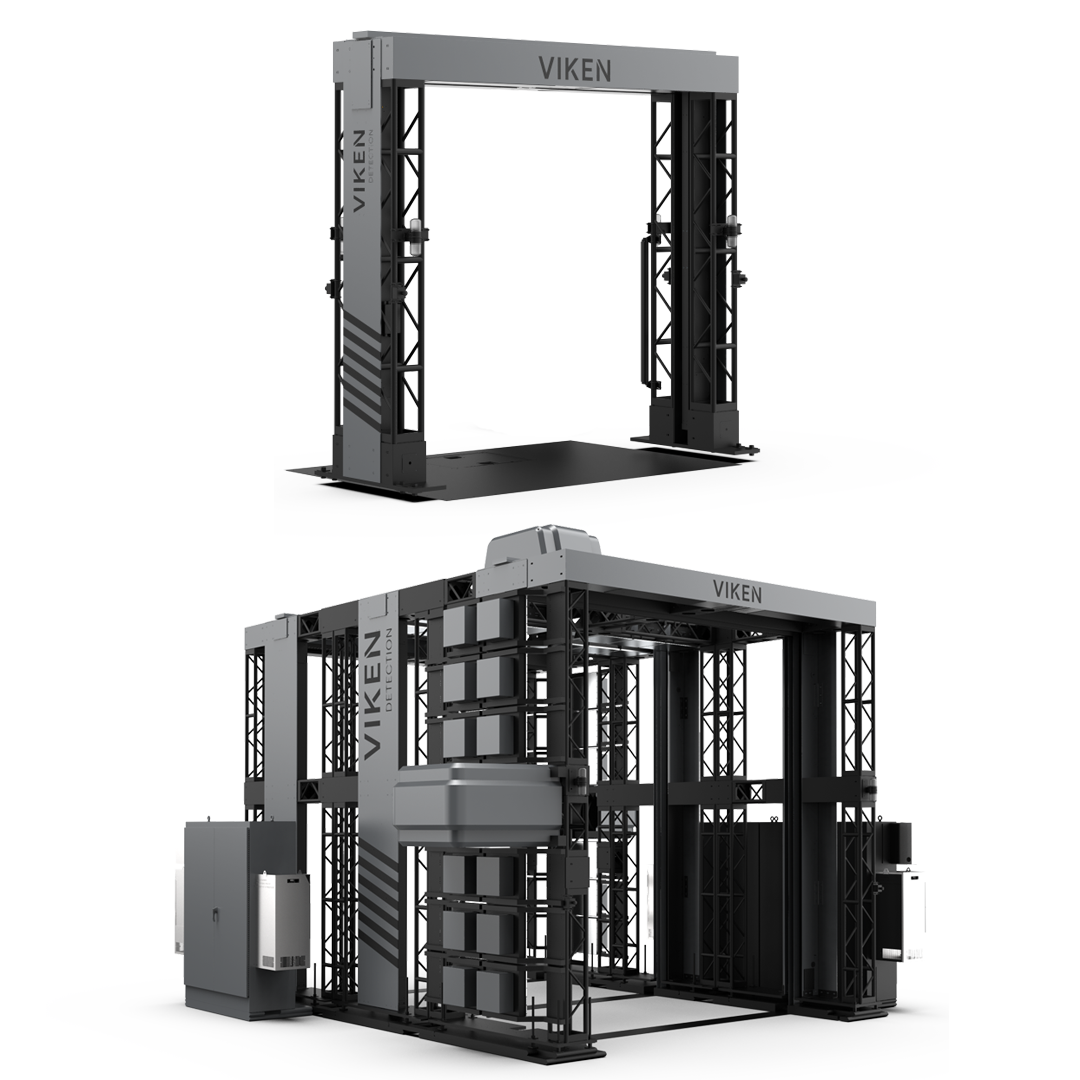
The Osprey and Harrier X-ray portals are purpose built for high throughput fixed site inspection providing the ultimate in checkpoint design for commercial and passenger vehicle scanning.
The Osprey UVX X-ray portal systems deliver fast, reliable under-vehicle inspection for border crossings, military installations, correctional facilities, and other high-security checkpoints. Our innovative under-vehicle X-ray portal provides high-throughput inspection of passenger and commercial vehicles at border crossings, military bases, and other high-security checkpoints by replacing slow, manual mirror-and-camera undercarriage inspections with automated X-ray scanning. Deployed by leading law enforcement agencies globally, the Osprey UVX screens commercial vehicles and the Osprey LEP screens passenger vehicles for narcotics, explosives, weapons, and other concealed contraband.
The Harrier X-ray portal systems deliver comprehensive, fast, reliable Multiview inspection for border crossings, military installations, correctional facilities, and other high-security checkpoints. Our innovative X-ray portal provides high-throughput inspection of passenger and commercial vehicles at border crossings, military bases, and other high-security checkpoints. Deployed by leading border security agencies globally, Harrier 2VX, 3VX and 4VX screen passenger or commercial vehicles for narcotics, explosives, weapons, and other concealed contraband.
Harrier provides either two, three and four-sided, low-energy backscatter and transmission vehicle scanning. The 3VX utilizes Viken’s proprietary imaging technology to provide exceptional vehicle images with minimal radiation exposure. The 4VX adds the UVX for a 4th vantage point system.
Mobile X-ray Detection
Osprey Mobile X-ray Detection Systems
Purpose-built for deployable X-ray Detection
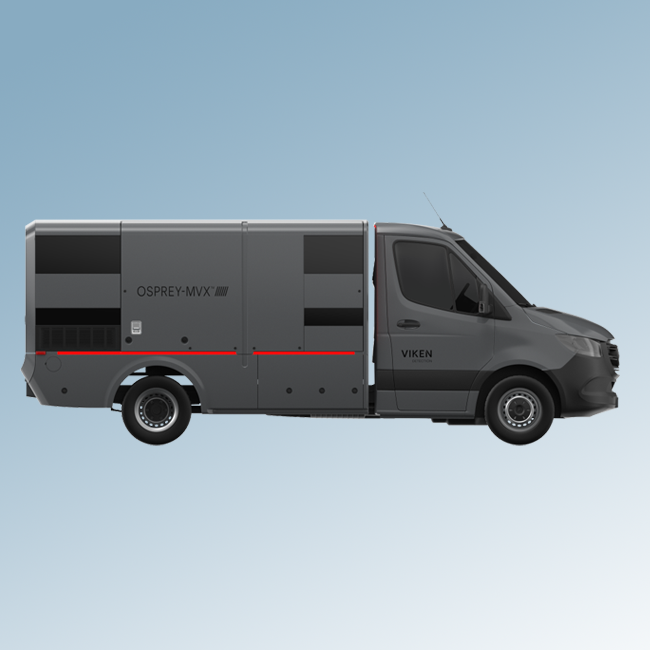
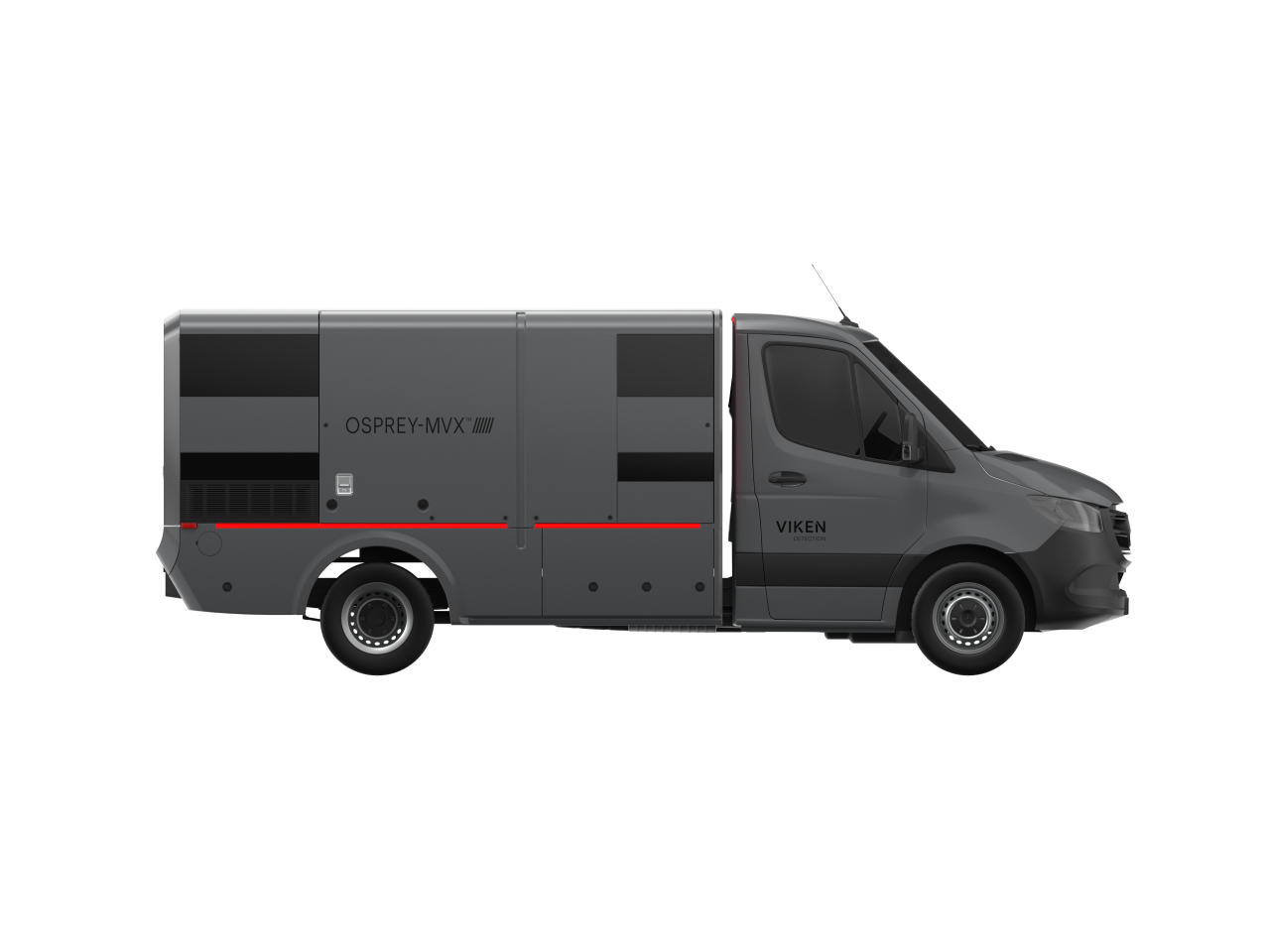
The Osprey mobile line-up is designed for any detection situation anywhere providing the ultimate in checkpoint design flexibility for optimized vehicle scanning.
With fast, easy deployment, The Osprey family of mobile vehicle X-ray are self-contained systems that are ready to go wherever security screening countermeasures are urgently needed. Their innovative design gives inspection officers backscatter images and optional transmission images which can reveal threats like explosives, weapons, drugs, currency, and other contraband items.
Frequently Asked Questions

Critical infrastructure sites, such as government buildings, healthcare facilities, manufacturing plants, utility providers, and transportation hubs use x-ray inspection to screen vehicles and personal items for concealed weapons, explosives, or other threats before they enter the site, without requiring physical searches of every item or vehicle.
Handheld x-ray imagers are portable devices used for inspecting personal items like backpacks, purses, and coolers at entry points. Fixed large-scale vehicle scanners are permanently installed at a site for continuous, high-throughput vehicle screening. Mobile scanners are trailer/vehicle-based units that can be transported to a location and set up for vehicle inspection, offering large-scale scanning capability without a permanent installation.
Yes. Mobile trailer-mounted vehicle scanners are designed to be transported and set up for inspection wherever they’re needed, making them suitable for temporary security needs, special events, or sites without a permanent fixed scanner.
A fixed large-scale vehicle scanner suits sites with consistent, ongoing vehicle traffic needing permanent screening infrastructure. A mobile trailer-mounted scanner gives a site flexibility to add large-scale screening capability temporarily for elevated threat conditions, special events, or secondary entry points without the cost of a second permanent installation.
Viken’s x-ray scanning systems are designed to inspect vehicles and personal items without requiring disassembly, offloading, or extensive manual search, helping sites maintain screening thoroughness while minimizing delays for authorized personnel and visitors.