Why a Low-Profile Imager Wins in the Field: The 6.4-Inch Difference
/ Aug 10, 2026
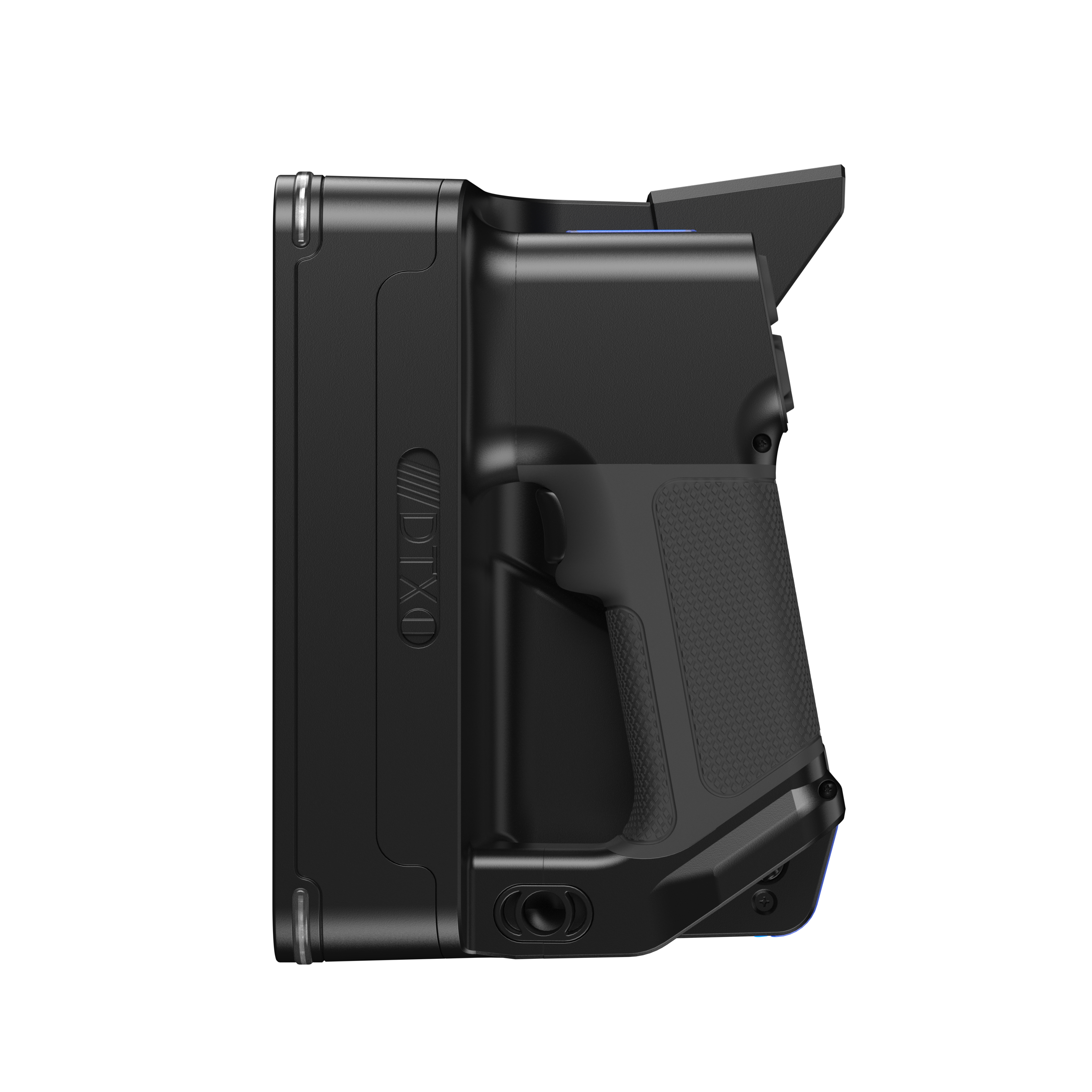
Every officer who has worked on vehicle interdiction knows the real search does not happen in the open. It happens in the seams. Behind the door panel, down in the rocker, under the dash and inside the wheel well. Traffickers do not leave the load on the seat. They build it into the tight, awkward, hard-to-reach voids of the vehicle precisely because those are the spots that are difficult to search and difficult to image.
That is why the physical size of your handheld imager matters more than most people think. And the number that matters most is the one nobody talks about on a spec sheet: the distance from the front of the detector to the back of the unit.
The dimension that determines reach
Handheld imagers get compared on screen size, weight, and penetration. All that matters. But the measurement that decides whether you can get the tool into the space you need to scan is the front-to-back depth, the thickness of the unit from the detection face to the back of the body.
On the RAVEN, that dimension is 6.4 inches, the thinnest imaging profile currently available in a handheld backscatter X-ray system. Viken’s functional specification is explicit about why this dimension is called out separately: the two largest dimensions define the detection face, and the smallest dimension, the front-to-back distance, is engineered to optimize image quality while facilitating operation in confined spaces.
In plain terms, the thinner the unit front to back, the deeper you can push it into a void, the flatter you can lay it against a panel, and the more of the vehicle you can reach without tearing it apart.
Why thickness translates to detection
A backscatter imager works best when the front of the unit is close to the object being scanned. The guidance is direct: keep the front of the RAVEN as close to the object of interest as possible while scanning for the best image quality and highest resolution. A bulky unit forces standoff. It cannot get flush into a tight space, so you either lose image quality, or you cannot scan that spot at all.
A slim 6.4-inch profile changes the math on a stop:
- Deeper reach into voids. Seams, cavities, wheel wells, and panel gaps that a thicker or more rigid system cannot enter become scannable.
- Non-Intrusive. More vehicles can be inspected in place, which means fewer teardowns, faster stops, and less liability for damage on searches that do not pan out.
- More coverage per stop. The ultra-slim design expands inspection coverage while minimizing the need for invasive searches, so you clear more of the vehicle in the time you have.
- Better ergonomics in tight spots. A thin, balanced unit supports single-handed operation in confined areas like vehicle interiors, above head level, or below the knee, exactly where contraband gets built in.
What this looks like on the road
Picture a roadside stop where your K9 alerts, but the initial search comes up empty. The load is not sitting in plain view. It is packed into the door cavity behind the panel or seated low in the rocker. A thick imager cannot get flat against that panel or down into that gap, so you are left guessing or reaching for tools to start pulling the vehicle apart.
With a 6.4-inch profile, you lay the detection face flush against the panel, get the source close to the concealment, and pull a clean scan without disassembly. You either confirm the anomaly and build your probable cause, or you clear the area and move on. Either way, the thin profile is what lets you make the call in the field, quickly, without tearing up a vehicle you might have to release.
The same advantage applies to package interdiction, structural voids on a search warrant, and confined space to work in corrections. Wherever the concealment is in a tight spot, the thinner the tool, the more you can inspect.
The bottom line for narcotics and interdiction teams
Contraband gets hidden where it is hard to reach. If your imager is too thick to get into those spaces, the capability on the spec sheet does not help you, because you cannot put the detector where the load is. A low-profile design solves the access problem at the root.
When you evaluate handheld X-ray, do not stop at screen size and weight. Ask for the front-to-back dimension, the distance from the detection face to the back of the unit and ask what it lets you reach.