Why Lead Detection (PbID) Is a Mission‑Critical Feature for Handheld X‑Ray Imagers in Narcotics Interdiction
/ Aug 11, 2026
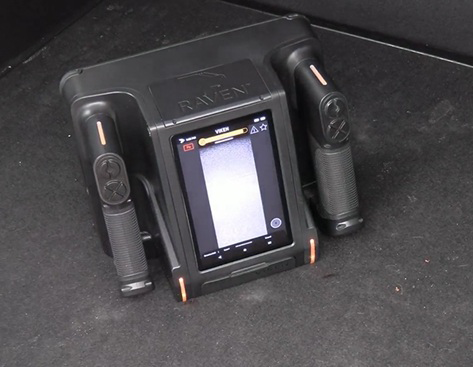
In modern narcotics enforcement, handheld X‑ray imagers have become force multipliers. Whether you are sweeping a vehicle, probing a trap, or clearing a parcel, today’s backscatter imagers give you an immediate view into concealment spaces without tearing everything apart.
But as trafficking organizations evolve, so must our tools. One of the most important innovations in this space is lead detection—PbID™. If you are working narcotics interdiction, understanding why this capability matters can mean the difference between finding the hide… or missing it entirely.
Seeing Lead Is Not Enough
On a basic X‑ray image, lead often appears no different from many other heavy materials. For years, traffickers have exploited this fact. Once they learned how effective backscatter imagers were at revealing aftermarket compartments, they began concealing their traps with lead lining or even lead-based paint to absorb X‑rays and mask the voids.
This created a dangerous gap as normal handheld X‑ray imager cannot see through lead and cannot distinguish lead from other dense metals.
That means officers could be scanning a vehicle, see an unusually dark or blocked‑out patch, and still walk away uncertain. Is it structural? Is it steel? Or is it a lead‑lined narcotics compartment designed specifically to defeat your technology?
Why Element‑Level Lead Detection (PbID) Changes the Game
Element‑level lead detection removes all the ambiguity. Instead of trying to interpret imaging artifacts, PbIDTM tells you instantly and definitively whether lead is present, because it analyzes the material itself using X-Ray Fluorescence Technology (XRF), same technology used for HUD Compliant Pb Based Paint testing .
This matters for four reasons:
1. Lead = Intent
Nobody accidentally lines a void with lead. When PbIDTM alerts you to lead inside a seat back, quarter panel, or engine bay, you are not seeing a manufacturing quirk you are seeing deliberate smuggling tradecraft.
2. Lead Is Used to Defeat Your X‑ray
Traffickers know that if they block your imager’s penetration, they delay and deniability. PbIDTM restores that visibility. Even if the X‑ray image cannot show the compartment behind the lead, PbID tells you the critical truth: “This hide is intentionally shielded.”
3. Confidence for Intrusive Searches
You have been there: standing with a team on the roadside or in a garage, debating whether to open a vehicle. PbID reduces the guesswork. When you are getting a positive lead detection reading, you can justify the next steps with confidence because you have objective confirmation that someone invested effort to conceal something.
4. Workflow Efficiency & Officer Safety
Every unnecessary tear‑down cost time, creates risk, and strains resources. PbIDTM helps officers:
- Avoid guess‑based searches.
- Prioritize high‑probability hides.
- Move faster through multiple scans during the day or shift
Why PbID Must Be Integrated and not a Separate Device
Some standalone lead testers exist, but in narcotics interdiction they are impractical. You do not have time to switch devices mid‑search, nor do you want multiple tools hanging off your kit.
Integrated PbIDTM, built directly into the handheld imager, means you get lead identification at the exact moment you are scanning the suspect area. It becomes a natural part of your workflow, not an extra step.
Viken Detection is the only manufacturer offering integrated PbID inside a handheld X‑ray imaging system, creating a capability that does not exist anywhere else on the market.
Real‑World Example: Lead‑Lined Traps in Vehicle Interdiction
On the Southwest border and across major trafficking corridors, officers have encountered increasingly sophisticated traps lined with lead sheeting. These traps present:
- No visible anomalies underneath a backscatter imager, and
- No obvious signs from the exterior of the vehicle.
Without PbID, these hides are effectively invisible. With PbID, however, the imager flags the presence of lead immediately even when the X‑ray image itself shows a “dead zone.” That simple alert gives your team the justification to dig deeper and ultimately seize the load. It enhances the imager you already rely on, turns previously invisible hides into actionable intelligence, and reduces the risk of missing a high‑priority load due to outdated technology.
Final Thoughts
If your team uses handheld X‑ray imagers but does not have PbIDTM, you are operating with a blind spot. Today’s smugglers are counting on outdated imaging technology. PbIDTM takes away their advantage.
Whether you are searching for corridor vehicles, parcel hubs, stash houses, or roadside hides, element‑level lead detection is no longer optional, it is mission critical.