Month: August 2026
Why Lead Detection (PbID) Is a Mission‑Critical Feature for Handheld X‑Ray Imagers in Narcotics Interdiction
/ Aug 11, 2026
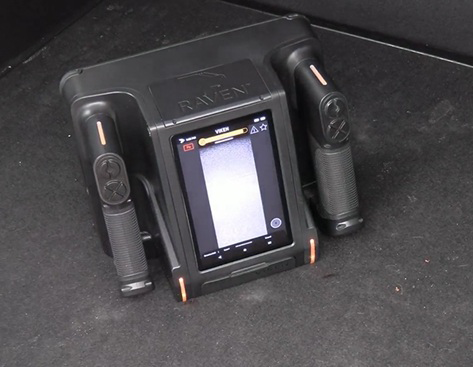
In modern narcotics enforcement, handheld X‑ray imagers have become force multipliers. Whether you are sweeping a vehicle, probing a trap, or clearing a parcel, today’s backscatter imagers give you an immediate view into concealment spaces without tearing everything apart.
But as trafficking organizations evolve, so must our tools. One of the most important innovations in this space is lead detection—PbID™. If you are working narcotics interdiction, understanding why this capability matters can mean the difference between finding the hide… or missing it entirely.
Seeing Lead Is Not Enough
On a basic X‑ray image, lead often appears no different from many other heavy materials. For years, traffickers have exploited this fact. Once they learned how effective backscatter imagers were at revealing aftermarket compartments, they began concealing their traps with lead lining or even lead-based paint to absorb X‑rays and mask the voids.
This created a dangerous gap as normal handheld X‑ray imager cannot see through lead and cannot distinguish lead from other dense metals.
That means officers could be scanning a vehicle, see an unusually dark or blocked‑out patch, and still walk away uncertain. Is it structural? Is it steel? Or is it a lead‑lined narcotics compartment designed specifically to defeat your technology?
Why Element‑Level Lead Detection (PbID) Changes the Game
Element‑level lead detection removes all the ambiguity. Instead of trying to interpret imaging artifacts, PbIDTM tells you instantly and definitively whether lead is present, because it analyzes the material itself using X-Ray Fluorescence Technology (XRF), same technology used for HUD Compliant Pb Based Paint testing .
This matters for four reasons:
1. Lead = Intent
Nobody accidentally lines a void with lead. When PbIDTM alerts you to lead inside a seat back, quarter panel, or engine bay, you are not seeing a manufacturing quirk you are seeing deliberate smuggling tradecraft.
2. Lead Is Used to Defeat Your X‑ray
Traffickers know that if they block your imager’s penetration, they delay and deniability. PbIDTM restores that visibility. Even if the X‑ray image cannot show the compartment behind the lead, PbID tells you the critical truth: “This hide is intentionally shielded.”
3. Confidence for Intrusive Searches
You have been there: standing with a team on the roadside or in a garage, debating whether to open a vehicle. PbID reduces the guesswork. When you are getting a positive lead detection reading, you can justify the next steps with confidence because you have objective confirmation that someone invested effort to conceal something.
4. Workflow Efficiency & Officer Safety
Every unnecessary tear‑down cost time, creates risk, and strains resources. PbIDTM helps officers:
- Avoid guess‑based searches.
- Prioritize high‑probability hides.
- Move faster through multiple scans during the day or shift
Why PbID Must Be Integrated and not a Separate Device
Some standalone lead testers exist, but in narcotics interdiction they are impractical. You do not have time to switch devices mid‑search, nor do you want multiple tools hanging off your kit.
Integrated PbIDTM, built directly into the handheld imager, means you get lead identification at the exact moment you are scanning the suspect area. It becomes a natural part of your workflow, not an extra step.
Viken Detection is the only manufacturer offering integrated PbID inside a handheld X‑ray imaging system, creating a capability that does not exist anywhere else on the market.
Real‑World Example: Lead‑Lined Traps in Vehicle Interdiction
On the Southwest border and across major trafficking corridors, officers have encountered increasingly sophisticated traps lined with lead sheeting. These traps present:
- No visible anomalies underneath a backscatter imager, and
- No obvious signs from the exterior of the vehicle.
Without PbID, these hides are effectively invisible. With PbID, however, the imager flags the presence of lead immediately even when the X‑ray image itself shows a “dead zone.” That simple alert gives your team the justification to dig deeper and ultimately seize the load. It enhances the imager you already rely on, turns previously invisible hides into actionable intelligence, and reduces the risk of missing a high‑priority load due to outdated technology.
Final Thoughts
If your team uses handheld X‑ray imagers but does not have PbIDTM, you are operating with a blind spot. Today’s smugglers are counting on outdated imaging technology. PbIDTM takes away their advantage.
Whether you are searching for corridor vehicles, parcel hubs, stash houses, or roadside hides, element‑level lead detection is no longer optional, it is mission critical.
Why the DTX Arm Belongs on Your Handheld X-Ray: Seeing the Whole Concealment, Not Just Half of It
/ Aug 11, 2026
Anyone who has worked at a roadside stop knows the frustration of a scan that is almost good enough. You put the X-Ray imager on the door panel, the quarter, the seat back, and you get a picture that tells you something is off, but not exactly what or how deep. You are making a call on partial information, with the clock running and a driver watching. That gap between “something looks wrong” and “I know what I am looking at” is where a lot of good stops fall apart.
The RAVEN DTX arm exists to close that gap.
Backscatter is great, but sometimes I need more.
Backscatter imaging is the workhorse of handheld X-ray, and for good reason. It excels at organics, the low-density material that makes up most of what we chase: powders, plant material, packaged narcotics. It reads the surface and near-surface layers, and it does not need access to both sides of the target, which is exactly what you want on a vehicle or a wall.
But physics is physics. Backscatter reads what bounces back, so it is strongest near the surface and weaker as you go deeper. It struggles with dense, layered, or metallic concealments, and it cannot always tell you what is sitting behind a thick steel panel or buried in a cluttered bag. Independent breakdowns of the technology say the same thing: backscatter is the better tool for organic threats near the surface, transmission is the better tool for structure and density, and in serious environments the two are deployed together.
That is the core argument for DTX. It is not a replacement for backscatter. It completes it.
What the DTX arm achieves.
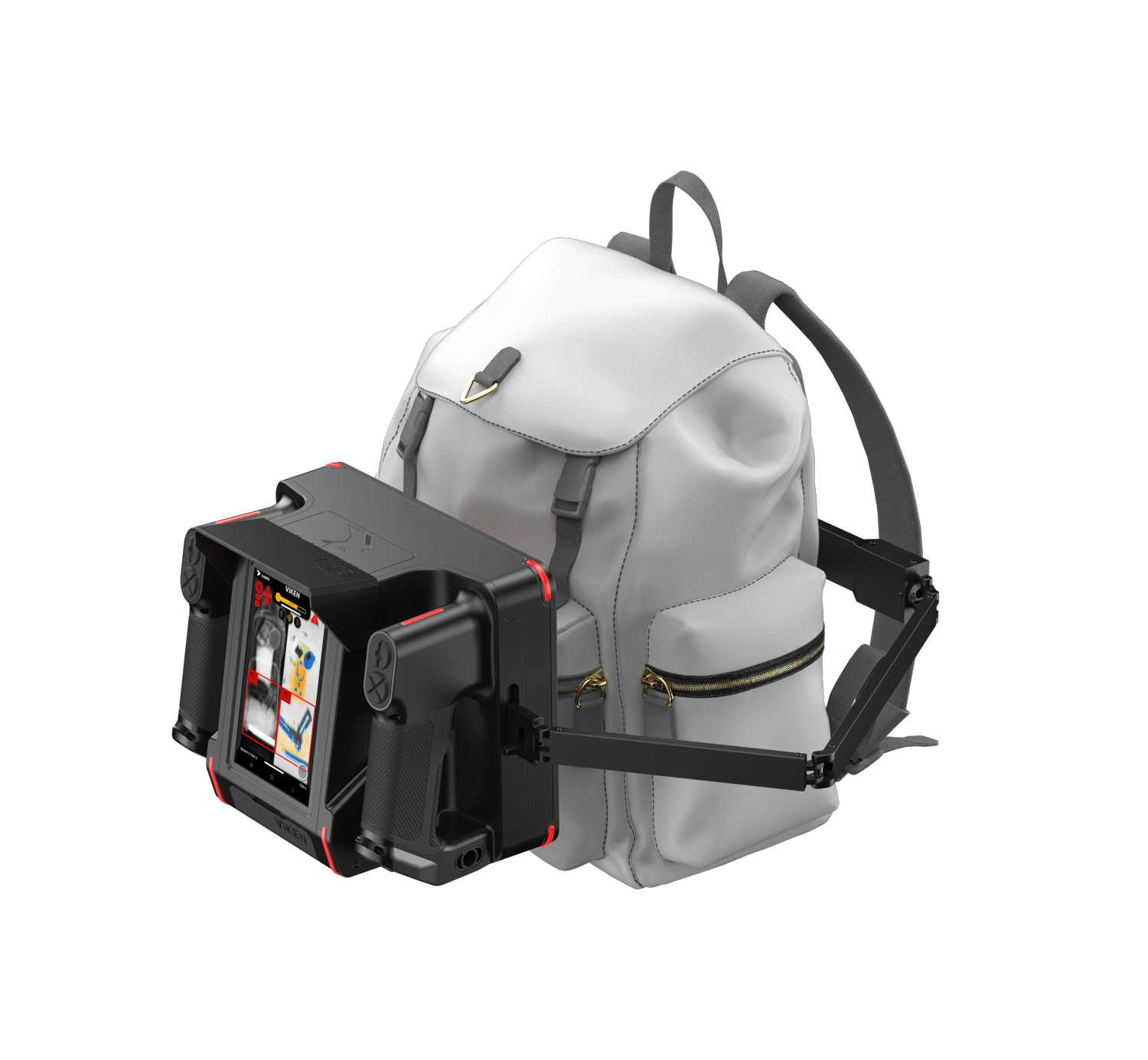
DTX stands for Dynamic Transmission X-ray. It is an optional articulating arm and bar that attaches directly to the RAVEN. You place the object between the RAVEN and the DTX bar, scan top to bottom, and the system automatically captures both backscatter and transmission data and displays them side by side. Transmission means the beam passes all the way through the target to the detector on the other side, giving you the density and internal structure view that backscatter alone cannot provide.
A few things that matter for interdiction work:
- Deep penetration. DTX delivers up to 40mm of steel penetration at 160kV and can be the difference between seeing into a packed engine bay or a dense trap and guessing at it.
- Metallic and layered targets. Transmission improves visibility into metallic threats, components, and concealment structures. On a mixed target like a loaded backpack or a suitcase full of clothing, it gives a clearer, more detailed picture of what is buried in the clutter.
- No panel to place. Because the bar is on the arm, you do not have to reach around and set a separate panel behind the object. This is unique to the integrated platform, and it saves time and exposure on every scan.
- Simultaneous, not either/or. You get organics from backscatter and structure from transmission in a single pass, side by side, so you are not switching tools or scanning twice.
What this looks like in the field
Picture the load vehicle again. Backscatter lights up an organic mass low in the door, which is your probable cause. But there is also a dense, boxy anomaly behind the panel that backscatter cannot fully resolve. Run the DTX and the transmission view show you the internal structure of that anomaly, the shape of a compartment, the density of what is inside, the metal framing around it. Now you are not just acting on a hunch, you have a clearer read on the concealment before you commit to a lengthy teardown.
The same applies to parcels and bags on a package interdiction detail, or to structural voids on a search warrant. Backscatter finds the organic hit; transmission tells you what the concealment is built out of and how deep it runs. That combination is what lets you prioritize, decide fast, and document the stop.
The bottom line for narcotics and interdiction teams
Traffickers build concealments to beat a single point of view. If your imager only reads the surface, you are working with half the picture, and half a picture is how good loads slip through and how good stops get challenged later. Transmission closes that blind spot. The DTX arm brings deep, dynamic transmission imaging to a handheld platform, in a single pass, without a separate panel, giving you organics and structure at the same time.
If you are evaluating handheld X-ray, do not stop at backscatter image quality. Ask what the tool can show you inside and behind the concealment. On the RAVEN, that answer is the DTX arm.
Why a Low-Profile Imager Wins in the Field: The 6.4-Inch Difference
/ Aug 10, 2026
Every officer who has worked on vehicle interdiction knows the real search does not happen in the open. It happens in the seams. Behind the door panel, down in the rocker, under the dash and inside the wheel well. Traffickers do not leave the load on the seat. They build it into the tight, awkward, hard-to-reach voids of the vehicle precisely because those are the spots that are difficult to search and difficult to image.
That is why the physical size of your handheld imager matters more than most people think. And the number that matters most is the one nobody talks about on a spec sheet: the distance from the front of the detector to the back of the unit.
The dimension that determines reach
Handheld imagers get compared on screen size, weight, and penetration. All that matters. But the measurement that decides whether you can get the tool into the space you need to scan is the front-to-back depth, the thickness of the unit from the detection face to the back of the body.
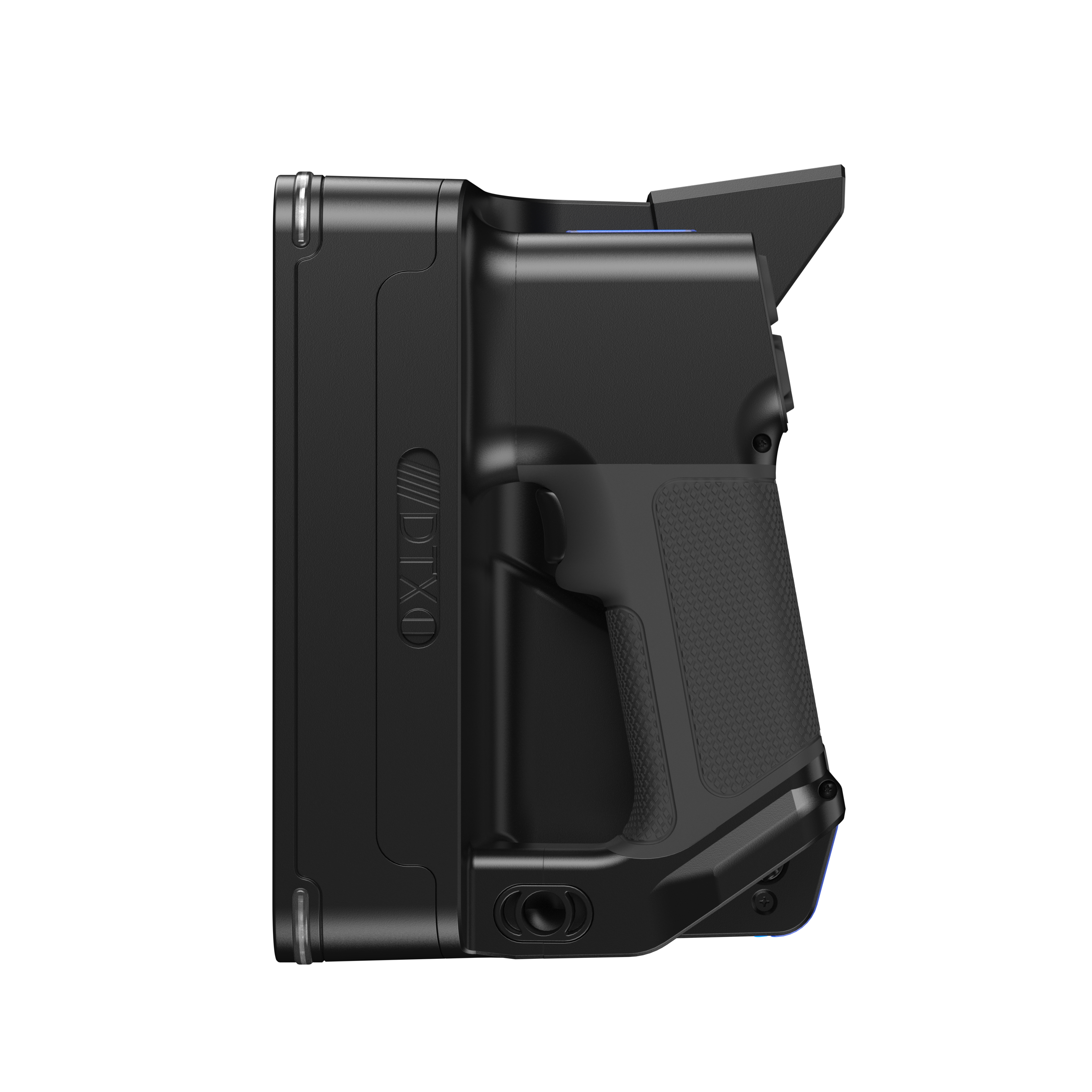
On the RAVEN, that dimension is 6.4 inches, the thinnest imaging profile currently available in a handheld backscatter X-ray system. Viken’s functional specification is explicit about why this dimension is called out separately: the two largest dimensions define the detection face, and the smallest dimension, the front-to-back distance, is engineered to optimize image quality while facilitating operation in confined spaces.
In plain terms, the thinner the unit front to back, the deeper you can push it into a void, the flatter you can lay it against a panel, and the more of the vehicle you can reach without tearing it apart.
Why thickness translates to detection
A backscatter imager works best when the front of the unit is close to the object being scanned. The guidance is direct: keep the front of the RAVEN as close to the object of interest as possible while scanning for the best image quality and highest resolution. A bulky unit forces standoff. It cannot get flush into a tight space, so you either lose image quality, or you cannot scan that spot at all.
A slim 6.4-inch profile changes the math on a stop:
- Deeper reach into voids. Seams, cavities, wheel wells, and panel gaps that a thicker or more rigid system cannot enter become scannable.
- Non-Intrusive. More vehicles can be inspected in place, which means fewer teardowns, faster stops, and less liability for damage on searches that do not pan out.
- More coverage per stop. The ultra-slim design expands inspection coverage while minimizing the need for invasive searches, so you clear more of the vehicle in the time you have.
- Better ergonomics in tight spots. A thin, balanced unit supports single-handed operation in confined areas like vehicle interiors, above head level, or below the knee, exactly where contraband gets built in.
What this looks like on the road
Picture a roadside stop where your K9 alerts, but the initial search comes up empty. The load is not sitting in plain view. It is packed into the door cavity behind the panel or seated low in the rocker. A thick imager cannot get flat against that panel or down into that gap, so you are left guessing or reaching for tools to start pulling the vehicle apart.
With a 6.4-inch profile, you lay the detection face flush against the panel, get the source close to the concealment, and pull a clean scan without disassembly. You either confirm the anomaly and build your probable cause, or you clear the area and move on. Either way, the thin profile is what lets you make the call in the field, quickly, without tearing up a vehicle you might have to release.
The same advantage applies to package interdiction, structural voids on a search warrant, and confined space to work in corrections. Wherever the concealment is in a tight spot, the thinner the tool, the more you can inspect.
The bottom line for narcotics and interdiction teams
Contraband gets hidden where it is hard to reach. If your imager is too thick to get into those spaces, the capability on the spec sheet does not help you, because you cannot put the detector where the load is. A low-profile design solves the access problem at the root.
When you evaluate handheld X-ray, do not stop at screen size and weight. Ask for the front-to-back dimension, the distance from the detection face to the back of the unit and ask what it lets you reach.
Why Precious Metal ID (PMid) Belongs on Every Handheld X-ray Imager
/ Aug 10, 2026
If you have worked on narcotics or interdiction long enough, you already know the search does not end when you find the dope. The money is the other half of the case, and the money is getting harder to find. Bulk cash still moves, but sophisticated organizations have learned that cash is bulky, traceable, and increasingly flagged at the bank. So, they convert. They turn illicit proceeds into something that holds value, crosses border quietly and does not trip the same alarms. Increasingly, that something is gold and platinum.
This is where Precious Metal PmID) on a handheld X-ray imager stop being a “nice to have” and becomes a real investigative tool.
The laundering problem you are up against
Gold and precious metals are attractive to launderers for the same reasons they have always been attractive to everyone else: stable value, high liquidity, and near-total anonymity. The Financial Action Task Force (FATF) has repeatedly flagged gold as an alternative vehicle for moving and storing criminal proceeds precisely because it is anonymous, easily transformed, and interchangeable.
The techniques are not exotic:
- Conversion and storage. Dirty cash is used to buy gold or platinum, which becomes a compact storage of value that can sit in a trap or ride in a load vehicle. A watch, a bar, or a handful of coins can replace a duffel bag of cash.
- Trade-based movement. Metals are shipped, over- or under-invoiced, and moved across jurisdictions to reposition wealth with limited transparency.
- Structuring and resale. High-value easily transported items are purchased below reporting thresholds and resold later with a veneer of legitimacy.
For the officer on the roadside or the investigator on a warrant, the practical problem is simple. A concealed pound of gold does not look like a pound of gold on a standard scan. Dense metal is dense metal. You need to know what the element is.
Why imaging alone is not enough.
A good backscatter image tells you something is there. It shows you the shape, the density, the anomaly behind the quarter panel or inside the battery box. That is essential, and it is what these tools do best. But an image cannot tell you the difference between a steel bracket, a lead trap, and a cache of gold. To make that call, you must work at the element level.
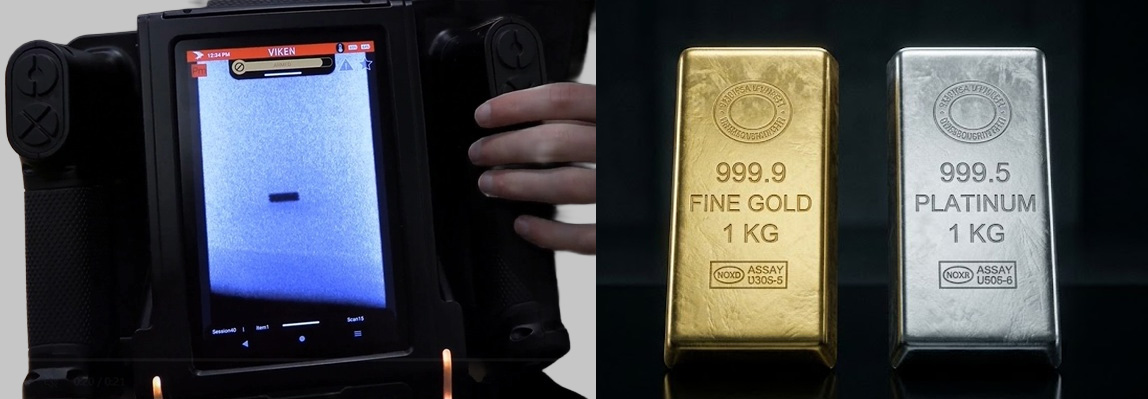
That is the core argument for PmID. It is not imaging. It is elemental identification using an onboard X-Ray Fluorescence (XRF) detector. On the Viken RAVEN, the same XRF sensor that powers lead detection analyzes the scan region for the specific signatures of gold (Au) and platinum (Pt), materials that rarely occur in normal vehicles, walls, or everyday cargo and are sometimes used by bad actors to move concealed payment for contraband. When a significant amount of gold or platinum is present, the operator gets an automatic alert. A red Pm icon appears in the corner of the screen, and the top banner turns red to draw attention. It is automatic, not a guessing game.
What this looks like in the field
Picture a highway interdiction stop. The load vehicle scans clean for large organic masses, but there is a dense anomaly tucked behind the rear seat. Image alone, you are not sure. With PmID running, the system flags gold in that region. Now you are not just looking at a suspicious shape, you have an elemental indicator pointing to concealed value, which changes how you build the stop, the questions you ask, and the case you hand to the prosecutor.
The same applies on a search warrant where you are looking for proceeds, not product, or in a corrections or facility environment where valuables are being moved improperly. The value is speed and certainty. You get an element-level indicator in the field, in seconds, without disassembly.
The bottom line for narcotics and laundering units
Interdiction and financial-crime work are converging. The same stop that yields the drugs is increasingly the stop that yields the proceeds, and those proceeds are being converted into metals to beat traditional detection. An imager that only shows you shapes leaves half the case on the table. Element-level identification closes that gap. PmID turns a dense unknown into a specific, actionable indicator of concealed value, and it does it in the field where you need the answer.
If you are evaluating handheld X-ray imagers for your mission, do not stop at image quality and penetration. Ask about what tools can identify at the element level.